Data Centers Are Turning To Solar, But Solar Needs To Be Protected
Discover how data centers integrate solar power to meet rising energy demands, and why ongoing maintenance is crucial for lasting benefits.
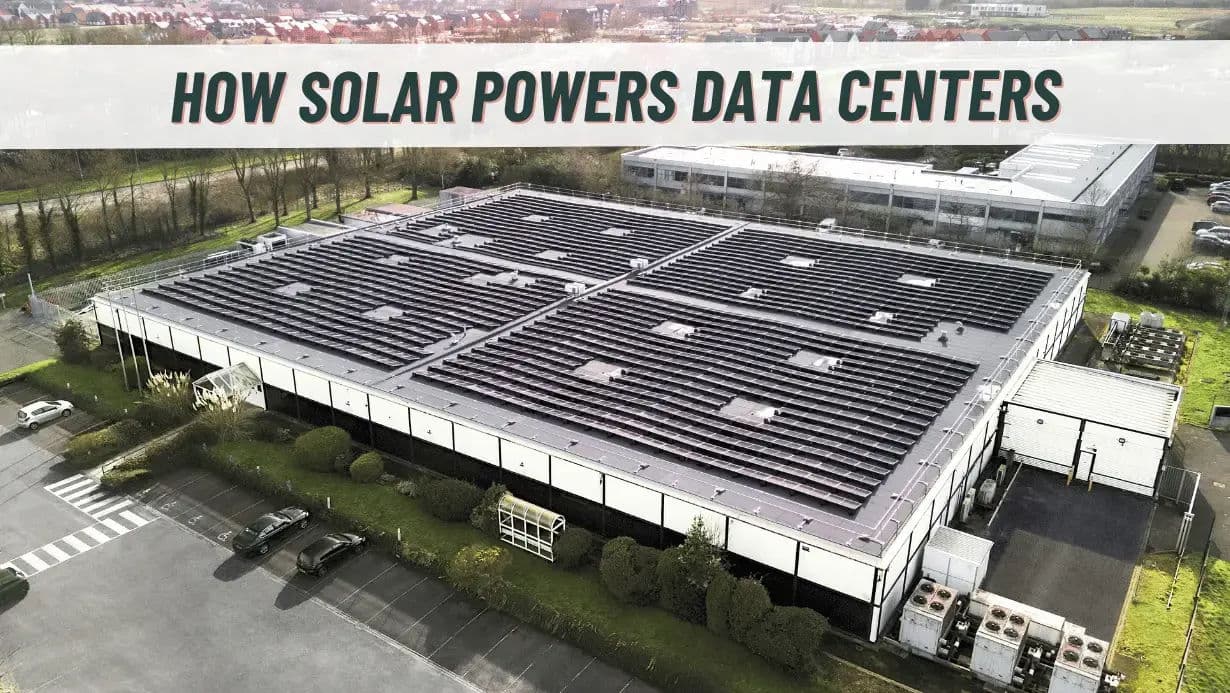
The Growing Energy Demand Of Data Centers
Data centers are no longer just buildings filled with servers. They are becoming some of the most energy hungry facilities in the country, and the rise of AI and cloud computing is pushing that demand even higher.
Recent projections show that U.S. data centers could consume 9% to 17% of national electricity by 2030, with the commonly discussed 13% figure sitting right in the middle of that forecast range.
The pressure is already showing up fast. Berkeley Lab reported that data centers used about 4.4% of total U.S. electricity in 2023 and could reach 6.7% to 12% by 2028, driven largely by AI servers, advanced chips, and the cooling systems required to keep them running.
For data center owners, this is changing the energy conversation. Solar is no longer just a sustainability talking point. It is becoming part of how facilities manage power risk, energy costs, and long term reliability.
Why Data Centers Are Looking At Solar
The traditional grid was not built for the speed and size of today’s data center growth. New AI campuses, regional colocation facilities, and cloud infrastructure hubs need large amounts of steady power, often in areas where utilities are already facing interconnection delays and rising demand.
The Department of Energy has pointed to solar, battery storage, wind, and energy efficiency as key tools to help meet rising data center electricity demand.
That does not mean solar replaces every other power source. Data centers still need firm, around the clock electricity. But solar can help offset a meaningful portion of energy use, reduce exposure to utility price swings, support ESG goals, and strengthen the overall energy plan for a facility.
This is especially important in the Northeast, where power costs are high, space is limited, and reliability matters every hour of the year.
Net Zero Commitments Are Speeding Up Adoption
Many technology companies, cloud providers, and data center operators have public renewable energy or net zero commitments. Those commitments are pushing energy teams to look beyond traditional utility power and consider more onsite and contracted renewable energy options.
That pressure is moving solar from “nice to have” into the planning conversation for campuses of all sizes. Hyperscalers may sign massive power purchase agreements, but regional data centers and colocation facilities are also starting to look at onsite solar, rooftop solar, solar carports, and other clean energy options.
A recent example is DataBank’s plan to install a 3.1 MW rooftop solar array at its HOU3 data center in Houston, which is expected to generate about 4.5 million kWh annually over a 25-year operating life.
That kind of project shows where the market is heading. Solar is becoming part of the business case, not just the sustainability report.
Solar Becomes Mission Critical Infrastructure
Once solar is installed at a data center, it should be treated like energy infrastructure, not a passive rooftop feature.
For a homeowner, a solar issue might mean a higher electric bill. For a data center, lost solar production can affect operating costs, energy planning, reporting, and long term financial performance. Even if the solar system is not the only power source, it still becomes part of the facility’s energy strategy.
Downtime in data center environments is expensive. Uptime Institute’s 2024 survey found that 54% of respondents said their most recent significant outage cost more than $100,000, while one in five reported costs above $1 million.
Solar downtime may not always create the same immediate outage risk as a failed server or cooling issue, but it still matters. A failed inverter, damaged wiring, string outage, loose connection, or unnoticed production drop can quietly turn a strong energy investment into an underperforming asset.
The Hidden Risk: Installed And Forgotten Solar
One of the biggest problems in solar is that systems often get installed and then ignored.
That approach may work for a short time, but it is risky over the life of the system. Dirt, pollen, snow load, nesting animals, damaged wiring, failed inverters, loose connections, shading changes, and monitoring issues can all reduce production.
IEA PVPS notes that soiling is highly site specific, but in certain conditions, extreme soiling losses of up to 25% per year have been reported when modules are not cleaned. Even lower levels of buildup can still cut into energy production and financial return over time.
That is the real issue for data center owners: solar underperformance is not always obvious from the ground. A system can look fine while one section is underproducing, one inverter is faulting, or one wiring issue is slowly getting worse.
Why O&M Is The Real Difference
Solar operations and maintenance is what protect the value of the asset after installation.
The Department of Energy states that regular monitoring, debris removal, wire management, and removal of animal nests are important parts of maintaining existing photovoltaic systems.
For data centers, a strong solar O&M plan should include:
Regular inspections
Production monitoring
Thermal imaging
Inverter checks
Wire and connector inspections
Vegetation or debris review
Fast response when monitoring shows a problem
NREL’s PV O&M best practices also identify thermal imaging as a tool for detecting string, module, and sub-module faults that may not be obvious through basic monitoring alone.
That is the type of discipline data center solar needs.
Where SunQuest Solar Fits In
SunQuest Solar is based in Westport, CT, and focused entirely on the O&M side of solar.
We do not do new installs. Our lane is keeping existing solar assets in the Northeast performing at their best through:
Regular maintenance
Inspections
Thermal imaging
Inverter health checks
System troubleshooting
Rapid response when something goes wrong
That matters for data center owners because the real value of solar is not just the installation date. It is the production over the next 10, 15, 20, and 25 years.
As more data centers across the Northeast add solar to manage energy costs, reduce grid exposure, and support renewable energy goals, they will need a local partner who understands that these systems cannot be left alone.
The Bottom Line For Data Center Owners
AI and cloud computing are creating a new energy reality. Data centers need more power, cleaner power, and better control over long term operating costs.
Solar can help, but only when it is properly maintained.